
Decision Spread
Difficulty: Easy
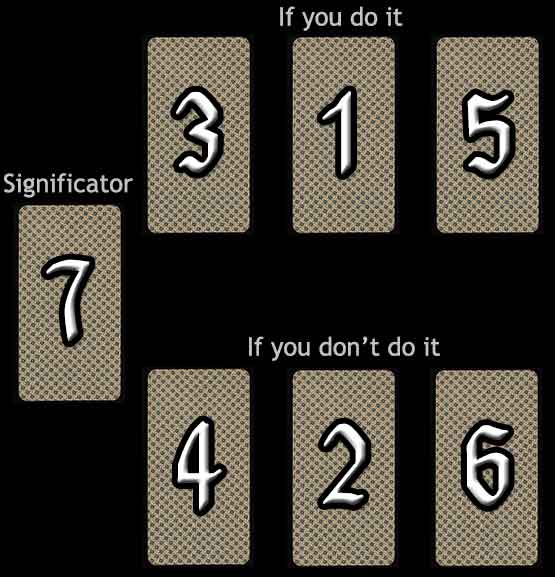
This simple but highly useful spread calls for a question to be asked in this format:
'What happens if I do (X), and what happens if I do not do (X)?'
Please note that it should not be viewed as a decision between two different options, but about whether a single option should be exercised or not. A second option would call for a separate reading.
Card #7 is the significator, the overall theme of the query.
Cards #3, #1, & #5 represent the chronological sequence of events that occurs if the reader chooses to do (X).
Cards #4, #2, & #6 represent the chronological sequence of events that unfolds if the reader chooses not to do (X).
Your Decision Reading
The Significator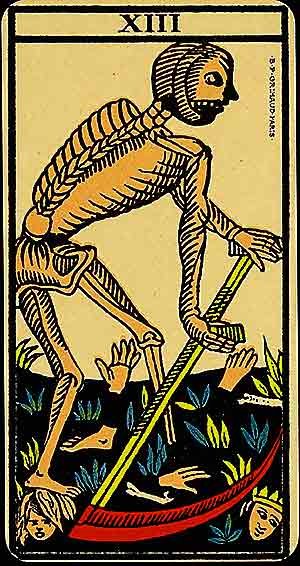 Death (La Mort) |
Outcome if you do it: | ||
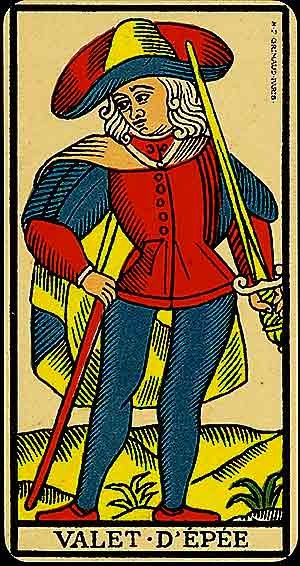 Valet of Swords |
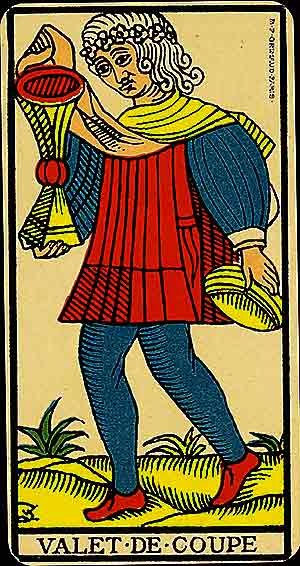 Valet of Cups |
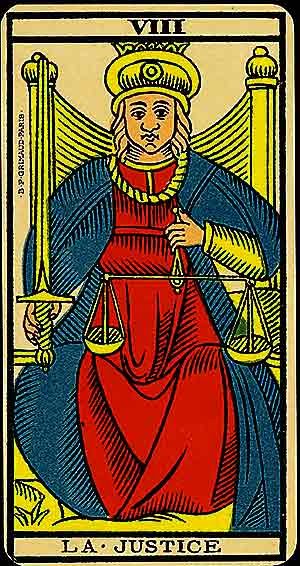 Justice (La Justice) |
|
| Outcome if you don't do it: | |||
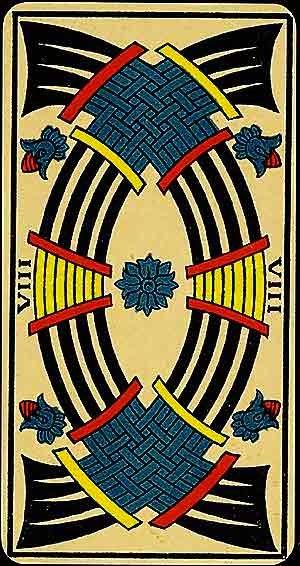 Eight of Swords |
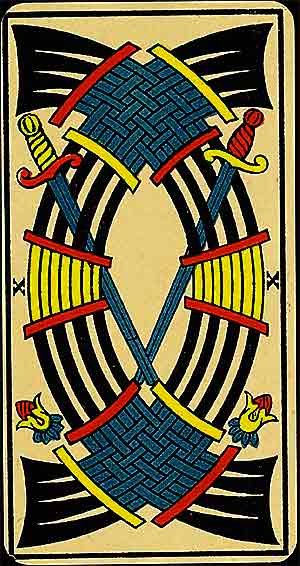 Ten of Swords |
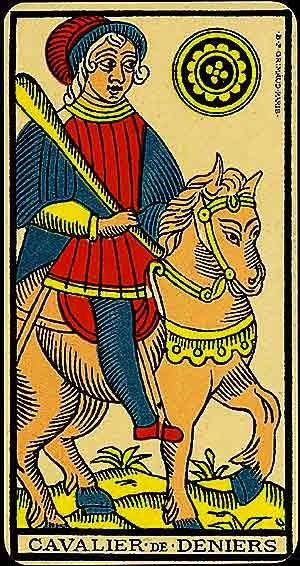 Knight of Coins |
|
Death
(La Mort)
Symbolism:
A skeletal figure wielding a scythe moves through a barren landscape. Heads, hands, and flowers lie beneath the scythe, symbolising the inevitable end of all things. Despite its grim imagery, the card signifies renewal and the promise of rebirth.
Meaning:
Death represents transformation, endings, and the clearing away of the old to make space for the new. This card doesn't predict physical death but rather signifies a profound shift or transition. It invites you to release attachments and embrace the inevitability of change.
In relationships, Death can mark the end of a phase, whether through growth or closure. Spiritually, it emphasises rebirth, renewal, and the cycles of life.
Keywords:
Transformation, endings, rebirth, change, renewal, transition, letting go, closure, release, metamorphosis.
Outcome if you do it:
Valet of Swords
Symbolism:
The Valet of Swords is shown standing confidently, holding a sword upright or at an angle, symbolising readiness and curiosity. The figure's alert posture reflects themes of observation, intellect, and the early stages of mastering mental or communicative skills.
Meaning:
The Valet of Swords symbolises intellectual curiosity, observation, and new ideas. It encourages exploring knowledge and being open to learning. However, it also warns of hasty communication or judgment.
In relationships, it suggests a need for honest dialogue or the exploration of new dynamics. Spiritually, it represents the first steps toward understanding profound truths.
Keywords:
Curiosity, observation, new ideas, communication, learning, honesty, vigilance, intellect, youthful energy, exploration.
Valet of Cups
Symbolism:
The Valet of Cups holds a cup, gazing into it with a reflective or curious expression, symbolising emotional openness and creative potential. The youthful figure represents the exploration of feelings, intuition, and the first steps toward emotional or artistic growth.
Meaning:
The Valet of Cups symbolises youthful creativity, emotional openness, and new beginnings in relationships or artistic endeavours. It suggests a message of love or the need to embrace your inner child's wonder and imagination.
In relationships, it reflects new connections or a renewal of emotional bonds. Spiritually, it invites you to remain receptive to intuitive insights and creative inspiration.
Keywords:
Creativity, inspiration, emotional openness, curiosity, new beginnings, playfulness, imagination, intuition, messages, artistic exploration.
Justice
(La Justice)
Symbolism:
Justice sits on a throne, holding a sword in one hand and scales in the other. The sword represents truth and decisiveness, while the scales signify balance and fairness. Her gaze is direct, indicating clarity and impartiality. The symmetrical composition of the card underscores equilibrium and order.
Meaning:
Justice represents truth, fairness, and the consequences of one's actions. It urges you to act with integrity and to weigh all factors before making decisions. This card often appears when a decision needs to be made or when karma is at play, reminding you that actions have lasting repercussions.
In relationships, Justice emphasises honesty and mutual respect. Spiritually, it calls for alignment between your actions and higher principles.
Keywords:
Truth, fairness, balance, integrity, accountability, karma, decisions, clarity, consequences, order.
Outcome if you do not do it:
Eight of Swords
Symbolism:
Eight swords form a restrictive and intricate pattern, evoking a sense of entrapment or limitation. The imagery reflects mental constraints, self-imposed boundaries, and the need for clarity to break free.
Meaning:
The Eight of Swords symbolises mental entrapment, self-doubt, or feeling stuck. It suggests that limitations are often self-imposed and can be overcome with clarity and courage. This card encourages you to reclaim your power and break free.
In relationships, it may reflect feelings of being trapped or misunderstood. Spiritually, it invites introspection to break free from limiting beliefs.
Keywords:
Restriction, self-doubt, entrapment, mental barriers, fear, powerlessness, clarity, courage, breaking free, introspection.
Ten of Swords
Symbolism:
Ten swords create a dramatic and heavy configuration, with sharp points emphasising finality and closure. The card represents the end of a difficult cycle, ultimate surrender, and the potential for new beginnings after hardship.
Meaning:
The Ten of Swords represents endings, betrayal, or collapse. It signifies the conclusion of a painful chapter and the opportunity for a new beginning. This card, while harsh, reminds you that the worst is behind you, and recovery is possible.
In relationships, it can indicate betrayal or the end of a partnership. Spiritually, it symbolises surrender and transformation through acceptance of life's cycles.
Keywords:
Endings, betrayal, collapse, release, transformation, surrender, painful closure, renewal, recovery, acceptance.
Knight of Coins
Symbolism:
The Cavalier of Coins is a steadfast figure on a sturdy horse, holding a coin firmly in hand, symbolising dedication and determination. The imagery conveys patience, responsibility, and a methodical approach to achieving goals.
Meaning:
The Knight of Coins represents reliability, diligence, and steady progress. He embodies the energy of persistence, ensuring that all tasks are completed with care and attention to detail. This card speaks to the need for patience and hard work in achieving long-term goals and financial stability.
In relationships, it suggests a reliable partner or a steady, consistent approach to commitment. Spiritually, it reflects the importance of persistence in achieving one's goals, whether material or otherwise.
Keywords:
Reliability, diligence, patience, responsibility, steady progress, methodical, persistence, commitment, work ethic, grounded.
