
The Golden Dawn or Thoth Method
Difficulty: Complicated
Note: Tarot decks that use reversed cards such as the Rider-Waite do not work well with this spread, which was designed to be read using elemental dignity.
The Golden Dawn spread is best suited for use with the bifrost Tarot and especially the Book of Thoth, as these decks are meant to be read a certain way with the court cards. Princes and queens represent actual men and women connected with the matter, while princesses generally represent ideas; thoughts or opinions, and knights represent arrival or departure of a matter depending on the direction faced.
In this tarot spread, particular attention should be paid to a card's exact position in relation to its neighbours. Whether the neighbour cards bear the same energy (suit) determines whether a card is considered well-dignified or ill-dignified. Opposite suits ill-dignify each other, while other suits are considered friendly. Tarot cards of the same suit or element strengthen each other.
As with other tarot spreads, it is important to count the cards' tendencies, such as whether there is a lot of one particular suit or number pattern. The patterns reveal special messages. Having several majors present indicates higher forces at work, several cups suggest strong emotions, etc.
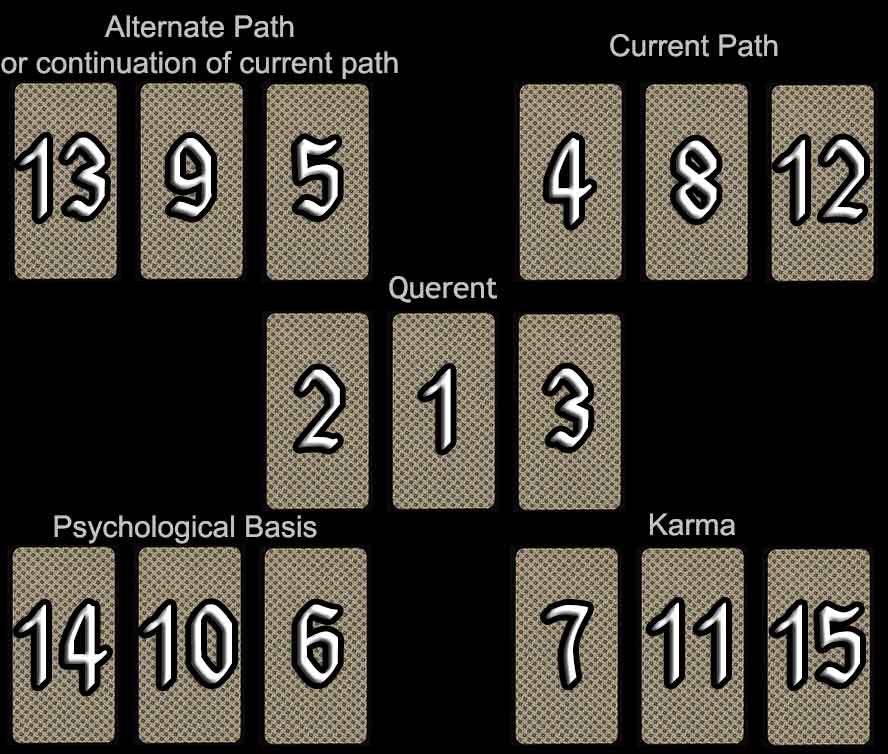
Card #1 represents the reader and the nature of the topic at hand.
Cards #2 & #3 are read in extension of #1 to further comprehend the nature of the topic.
The two sets of three tarot cards at the top of the spread represent chronological sets of events. The current path as it would unfold naturally is represented by cards #4, #8, & #12. The alternate path that could be taken is represented by cards #13, #9, & #5. However, if the reader gets the feeling these cards are telling them they go together, then the alternate path is to be considered an extension of the current path, and to be read chronologically in this order: #4, #8, #12, #13, #9, #5. Just keep in mind: this is only if the two paths seem particularly similar.
Cards #14, #10, & #6 shed light upon the psychological undertones of the current issue.
Cards #7, #11, & #15 represent the influences of karma and destiny beyond the reader's control. These cards suggest adapting to this, as fate.
Your Golden Dawn Reading
| The Alternate Path (or Extension of Current Path) |
Your Current Path |
|||||
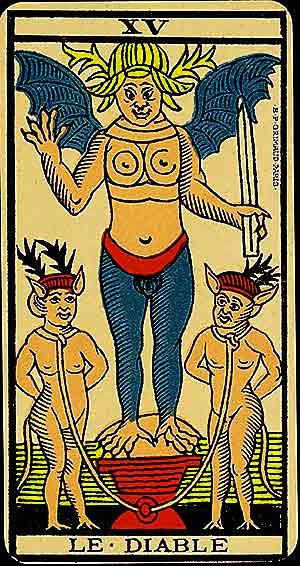 The Devil (Le Diable) |
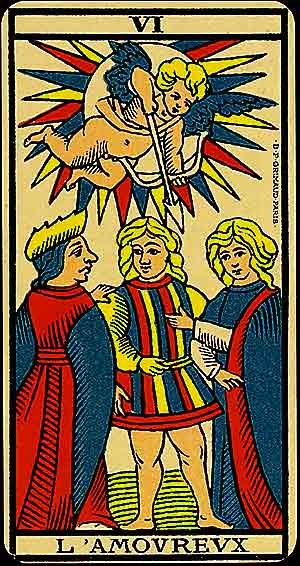 The Lovers (L'Amoureux) |
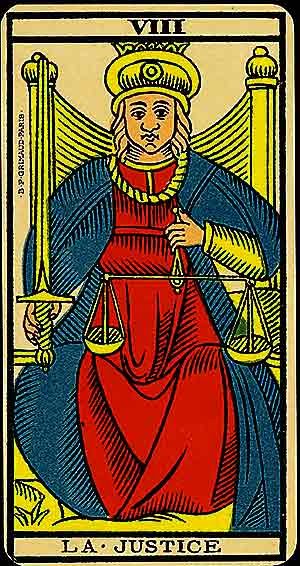 Justice (La Justice) |
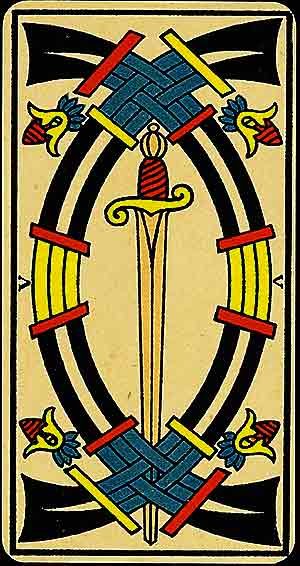 Five of Swords |
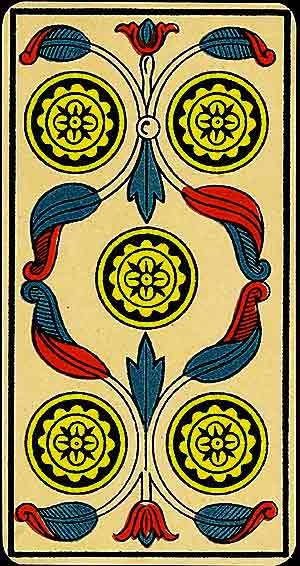 Five of Coins |
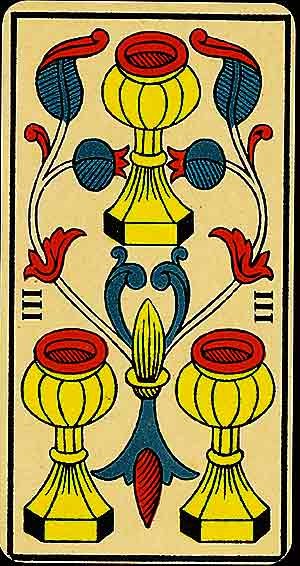 Three of Cups |
|
| The Querent | ||||||
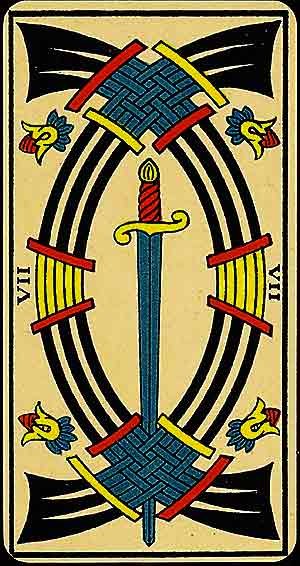 Seven of Swords |
 The Chariot (Le Chariot) |
 Ace of Swords |
||||
| The Psychological Basis | Karma | |||||
 Seven of Cups |
 Ten of Coins |
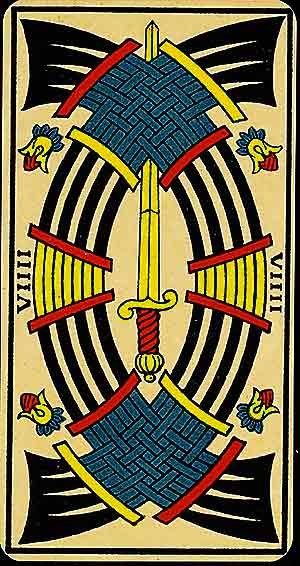 Nine of Swords |
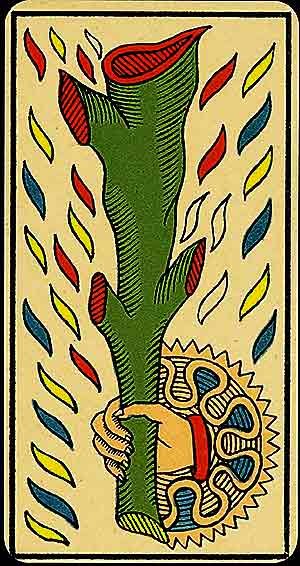 Ace of Batons |
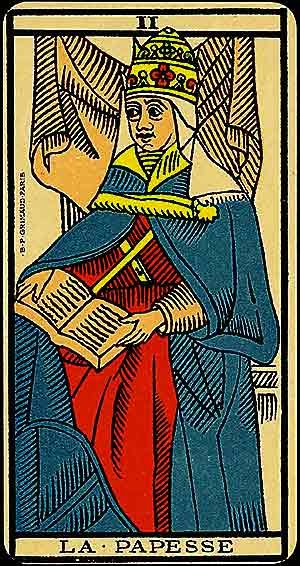 The High Priestess (La Papesse) |
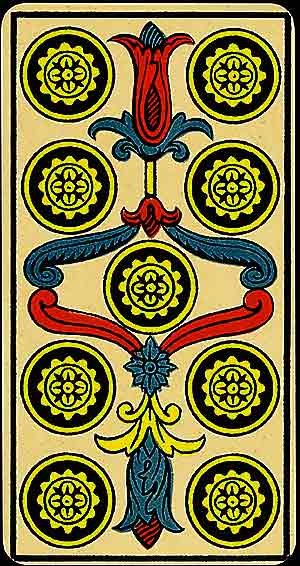 Nine of Coins |
|
The Querent
cards represent the querent and the nature of the topic at hand. The first card (in the center of the spread) represents the very core of the matter, and the other two cards around it are added to it in order to further comprehend the nature of the topic.
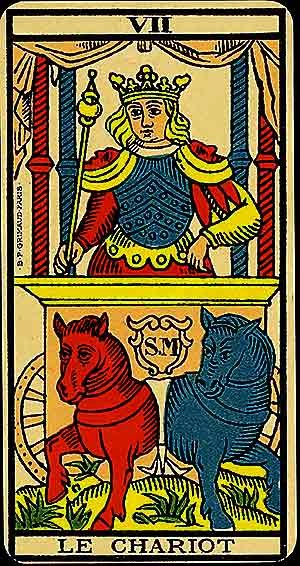
(Le Chariot)
Symbolism:
The Chariot shows a warrior standing in a chariot pulled by two horses of contrasting colors, symbolising opposing forces. The warrior wears a crown and holds a wand or reins, signifying control and determination. The canopy above him suggests moving forward from a place of stability into the unknown.
Meaning:
The Chariot signifies triumph through determination, discipline, and focus. It speaks to mastering conflicting forces and steering your life toward success. This card often appears when you are on the brink of achieving a goal, but it reminds you that persistence and self-control are essential.
In relationships, the Chariot suggests navigating challenges together. Spiritually, it emphasises aligning your willpower with your higher purpose.
Keywords:
Triumph, determination, focus, control, discipline, victory, mastery, momentum, perseverance, alignment.
Symbolism:
Seven swords are arranged in a slightly chaotic or uneven configuration, emphasising complexity and strategy. The design suggests themes of cunning, deception, and the need for careful planning.
Meaning:
The Seven of Swords represents strategy, deception, or avoiding confrontation. It suggests a need to act carefully, but warns against dishonesty or taking shortcuts. This card encourages cleverness but with integrity.
In relationships, it may indicate secrecy or mistrust. Spiritually, it suggests the importance of facing the truth rather than evading it.
Keywords:
Strategy, cunning, deception, avoidance, stealth, dishonesty, planning, mistrust, cleverness, truth-seeking.
Symbolism:
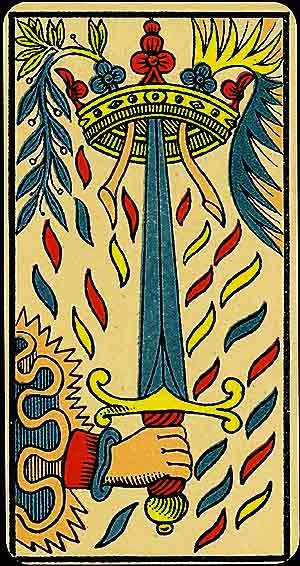
A single, upright sword dominates the design, often crowned with laurels or floral motifs, symbolising clarity and power. This card evokes themes of mental focus, decisive action, and the emergence of truth.
Meaning:
The Ace of Swords signifies a breakthrough, clarity of thought, or the beginning of intellectual endeavours. It heralds a new phase where truth, logic, and reason will guide your actions. This card encourages decisiveness, honesty, and a commitment to facing challenges with integrity.
In relationships, it may suggest open communication or a new understanding. Spiritually, it represents cutting through illusions to achieve enlightenment.
Keywords:
Clarity, breakthrough, truth, mental focus, logic, decisiveness, honesty, intellectual pursuit, triumph, communication.
Your Current Path
cards represent your current path as it would unfold naturally. These cards are read in chronological order from left to right.
Symbolism:
Five swords create a more irregular arrangement, their sharp points emphasising conflict or struggle. The design reflects themes of tension, competition, and the potential for discord or loss.
Meaning:
The Five of Swords represents conflict, betrayal, or hollow victories. It suggests a situation where winning comes at the expense of others or personal values. This card warns against manipulation or dishonourable actions and invites reflection on ethical choices.
In relationships, it may indicate arguments or feelings of alienation. Spiritually, it highlights the importance of integrity in the face of challenges.
Keywords:
Conflict, betrayal, hollow victory, loss, manipulation, moral ambiguity, dishonour, reflection, ethical choices, tension.
Symbolism:
Five coins create an irregular arrangement, with sparse decoration reflecting struggle or imbalance. This card symbolises financial hardship, instability, and the opportunity to find support during challenging times.
Meaning:
The Five of Coins represents financial loss, scarcity, or hardship. It reflects feelings of isolation or being "shut out" from security or comfort. However, this card also offers the reminder that help is often available if one is willing to seek it, whether in the form of external support or a change in mindset.
In relationships, it indicates feelings of neglect or abandonment. Spiritually, it encourages reaching out for support and reframing one's perspective on hardship to find hope in the darkest times.
Keywords:
Loss, scarcity, hardship, abandonment, isolation, financial struggle, poverty, lack, seeking help, resilience.
Symbolism:
Three cups are arranged in a triangular pattern, adorned with flowers or vines to evoke celebration and abundance. The image suggests themes of friendship, shared joy, and communal achievements.
Meaning:
The Three of Cups represents celebration, community, and shared joy. It suggests coming together with others to honour achievements or simply enjoy the present moment. This card encourages connection, gratitude, and the recognition of shared blessings.
In relationships, it reflects harmony and support within friendships or groups. Spiritually, it emphasises the importance of shared rituals and collective growth.
Keywords:
Celebration, community, joy, friendship, gratitude, support, connection, abundance, festivity, shared blessings.
The Alternate Path
cards represent the alternate path that you could choose to take in lieu of the Current Path. However, if the cards that come up seem to indicate that they go along with the Current Path, these three cards should be interpretted not as an Alternate Path, but as a chronological extension of the Current Path (also read from left to right).
(Le Diable)
Symbolism:
The Devil is portrayed as a horned figure with two chained human figures below, representing bondage to materialism or desires. The chains are loose, suggesting self-imposed limitations. Their animalistic features symbolise the materialism and polarity of nature.
Meaning:
The Devil represents temptation, materialism, and the shadow side of human nature. It highlights unhealthy attachments, addictions, or fears that may be holding you back. This card calls for awareness and the courage to break free from self-imposed limitations.
In relationships, it warns of codependency or power imbalances. Spiritually, the Devil challenges you to confront and integrate your shadow self.
Keywords:
Temptation, bondage, materialism, addiction, fear, control, power, shadow self, self-awareness, liberation.
(L'Amoureux)
Symbolism:
The Lovers card depicts a man standing between two women, with Cupid above aiming an arrow. The scene suggests a choice or a union, with the women often representing opposing influences. In some interpretations, the figures are Adam and Eve, symbolising the duality of earthly and spiritual love.
Meaning:
The Lovers represent connection, harmony, and the power of choice. This card speaks to deep relationships, whether romantic or platonic, and the alignment of values and goals. However, it also highlights the necessity of making meaningful decisions, often at a crossroads where the heart and mind must collaborate.
In relationships, the Lovers symbolise love, commitment, and mutual respect. Spiritually, they encourage balancing the dualities within yourself and finding unity in diversity.
Keywords:
Love, harmony, connection, choice, duality, relationships, unity, attraction, alignment, crossroads.
(La Justice)
Symbolism:
Justice sits on a throne, holding a sword in one hand and scales in the other. The sword represents truth and decisiveness, while the scales signify balance and fairness. Her gaze is direct, indicating clarity and impartiality. The symmetrical composition of the card underscores equilibrium and order.
Meaning:
Justice represents truth, fairness, and the consequences of one's actions. It urges you to act with integrity and to weigh all factors before making decisions. This card often appears when a decision needs to be made or when karma is at play, reminding you that actions have lasting repercussions.
In relationships, Justice emphasises honesty and mutual respect. Spiritually, it calls for alignment between your actions and higher principles.
Keywords:
Truth, fairness, balance, integrity, accountability, karma, decisions, clarity, consequences, order.
The Psychological Basis
cards shed light upon the psychological undertones of the current problem.
Symbolism:
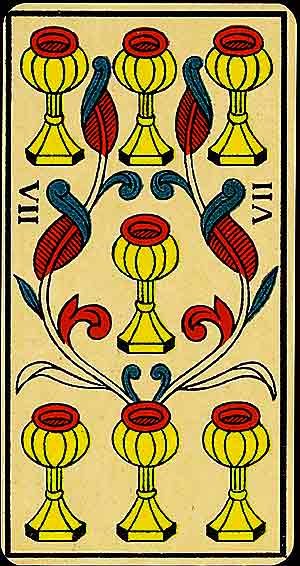
Seven cups are arranged in an intricate and slightly asymmetrical pattern, surrounded by flourishing floral designs, hinting at dreams and desires. The card represents choices, imagination, and the allure of possibilities, some of which may be illusory.
Meaning:
The Seven of Cups represents imagination, options, and the challenge of discerning between reality and illusion. It signifies the allure of possibilities and warns against becoming overwhelmed by fantasies or unrealistic expectations.
In relationships, it suggests idealisation or confusion about choices. Spiritually, it reflects the need to ground your aspirations in practicality while staying connected to your vision.
Keywords:
Imagination, options, illusion, temptation, choice, fantasy, dreams, discernment, creativity, vision.
Symbolism:
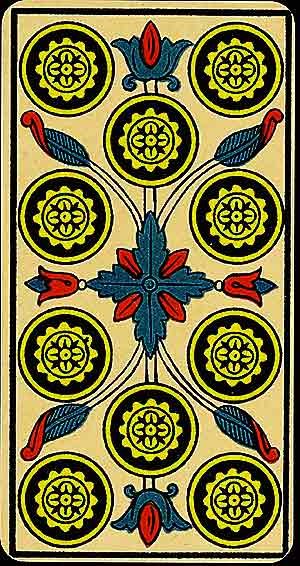
Ten coins form a complex and interconnected pattern, adorned with rich, intricate designs that symbolise legacy and wealth. The imagery reflects lasting success, generational stability, and the fulfilment of long-term goals.
Meaning:
The Ten of Coins represents wealth, legacy, and long-term security. It signifies the culmination of efforts to build a stable, prosperous life for oneself and future generations. This card speaks to the material rewards that come from planning and sustained effort over time, especially in the realms of family, heritage, and financial stability.
In relationships, it highlights the importance of family, tradition, and long-term commitments. Spiritually, it represents the fulfilment of material goals and the creation of a lasting legacy.
Keywords:
Legacy, wealth, family, security, prosperity, tradition, stability, inheritance, culmination, long-term success.
Symbolism:
Nine swords are arranged densely, often creating an oppressive visual effect, with minimal decorative relief. The design symbolises anxiety, worry, and the weight of mental burdens, urging introspection for resolution.
Meaning:
The Nine of Swords symbolises worry, guilt, or anguish. It reflects a mind overwhelmed by fears or regrets, often magnified by isolation. This card urges you to confront your anxieties directly and seek perspective to regain peace.
In relationships, it can indicate stress or emotional distance caused by overthinking. Spiritually, it calls for releasing inner turmoil and cultivating self-compassion.
Keywords:
Anxiety, guilt, fear, regret, mental anguish, overthinking, isolation, nightmares, perspective, self-compassion.
Karma
These cards represent the influences of karma and destiny that are beyond your control. They suggest adapting to this fate.
Symbolism:
A single upright baton surrounded by leaves emerges from a hand reaching through a portal, symbolising potential and growth. The floating leaves emphasise vitality and new beginnings, while the portal hints at divine inspiration.
Meaning:
The Ace of Batons heralds the spark of inspiration and the potential for creative or personal growth. It represents an opportunity to take bold action, start new projects, or pursue passions. This card encourages embracing fresh ideas and allowing enthusiasm to guide you.
In relationships, it can signify passion or the beginning of an exciting chapter. Spiritually, it represents awakening and alignment with your creative force.
Keywords:
Inspiration, potential, creativity, passion, action, growth, opportunity, vitality, enthusiasm, new beginnings.
(La Papesse)
Symbolism:
The High Priestess is shown seated, holding an open book, signifying hidden knowledge and mysteries. She is flanked by two pillars (sometimes black and white), representing duality and balance. Her veil hints at the separation between the conscious and subconscious. Her serene expression reflects her mastery of the inner world and her connection to divine intuition.
Meaning:
The High Priestess embodies mystery, wisdom, and the power of intuition. She encourages stillness and reflection, guiding you to trust your inner voice over external noise. This card often appears when something hidden needs to be uncovered, whether it's a secret, a truth, or a deeper understanding of oneself.
In relationships, the High Priestess may suggest emotional depth or hidden dynamics. Spiritually, she symbolises the gateway to higher knowledge, urging you to explore the realms of dreams and symbols to uncover your truth.
Keywords:
Intuition, mystery, inner wisdom, reflection, subconscious, hidden knowledge, spirituality, patience, introspection, stillness.
Symbolism:
Nine coins create a lush and balanced configuration, often surrounded by decorative flourishes or vines, representing abundance and independence. This card evokes themes of self-sufficiency, material comfort, and enjoying the fruits of one's labour.
Meaning:
The Nine of Coins symbolises self-sufficiency, comfort, and the rewards of hard work. It represents a state of contentment and luxury, achieved through independence and personal effort. This card encourages enjoying the fruits of one's labour and finding satisfaction in the material world without becoming overly attached to it.
In relationships, it may suggest a partner who values independence, or a period of solo fulfilment. Spiritually, it reflects the satisfaction that comes from aligning with one's personal goals and being at peace with one's accomplishments.
Keywords:
Self-sufficiency, luxury, abundance, independence, contentment, achievement, comfort, success, personal fulfilment, reward.
