
Path Spread
Difficulty: Easy
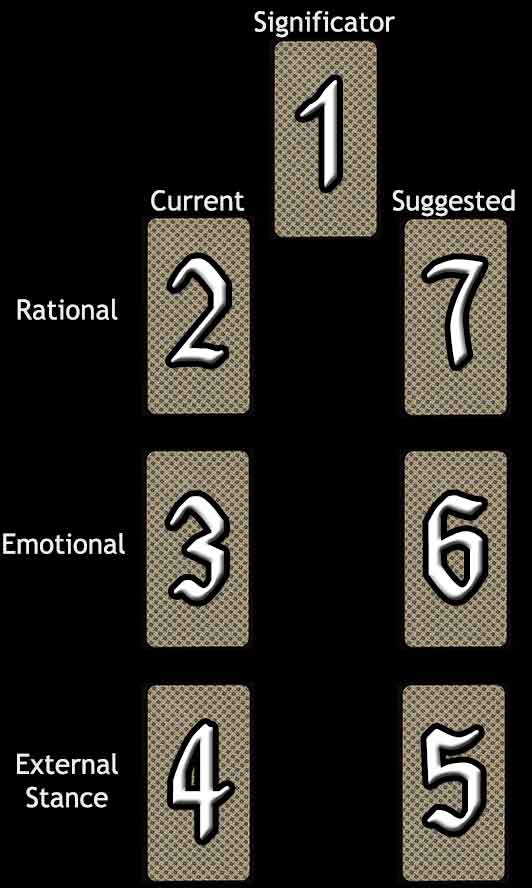
For the Path reading, one asks for suggestions how to behave properly to achieve a desired result. The Current column represents how the reader has been acting, and the Suggestedcolumn suggests how they should act to achieve a certain goal. The chart-like spread uses the standard three levels: Rational, Emotional, and External Stance (how one projects oneself outwardly). When comparing the Current and Suggested cards, the most important thing is to notice the differences between the two cards. It is these differences which hint at the behaviours that should be altered.
Card #1 is the significator, the card which should reflect the nature of the query and/or the desired outcome.
Card #2 shows the way the reader is and has been thinking. Card #7 suggests how to change the way one thinks to serve themselves better.
Card #3 suggests the reader's emotional attitude. Though it may seem difficult to manipulate one's own emotions, it can be done if one puts their mind to it. For example, acting a certain way such as smiling intently for a few minutes will lead the emotions to follow. When a person tries this, as silly as the exercise seems, they find this to evoke the emotion of happiness. For this reading, one should try to make themselves feel the way that Card #6 suggests.
External Stance means how one acts outwardly, how they hope others see them. Card #4 is about how the reader has been acting, while #5 indicates how they should act outwardly, for other people's sake. It is the differences between these cards that hint at what behaviour patterns should be altered.
Your Path Reading
| Current | The Significator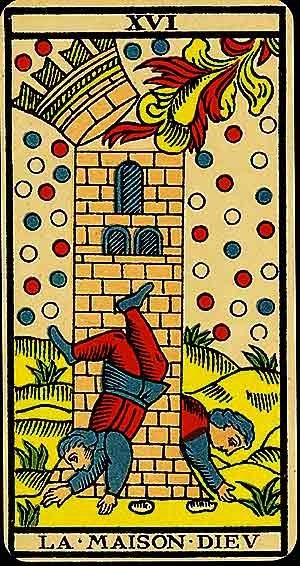 The Tower (La Maison Dieu) |
Suggested | |
| Thought | 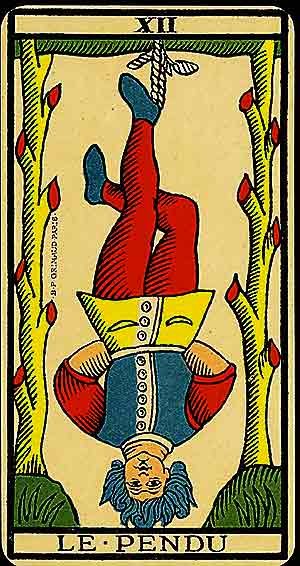 The Hanged Man (Le Pendu) |
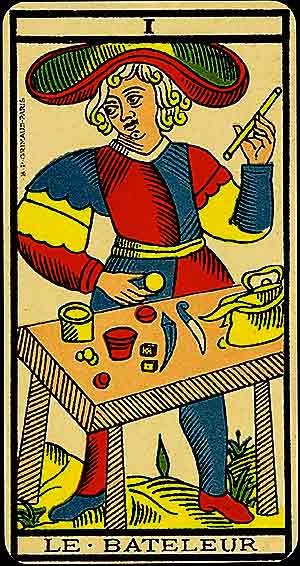 The Magician (Le Bateleur) |
|
| Emotion | 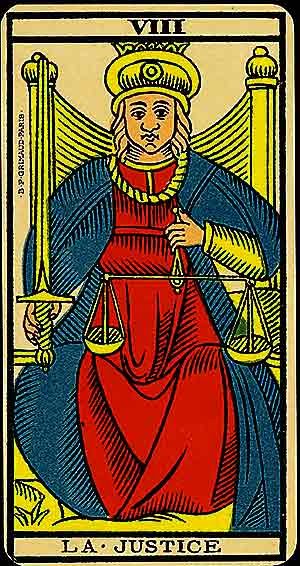 Justice (La Justice) |
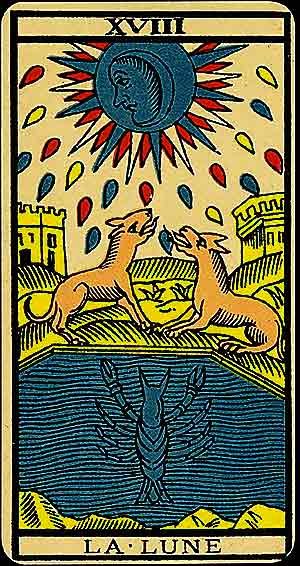 The Moon (La Lune) |
|
| External Stance | 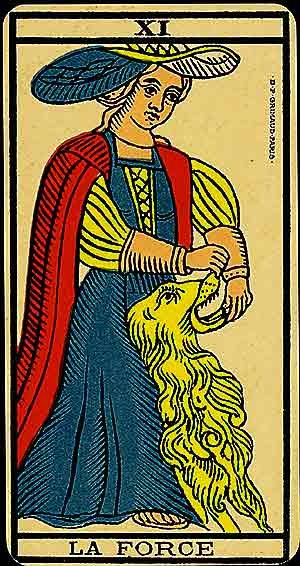 Strength (La Force) |
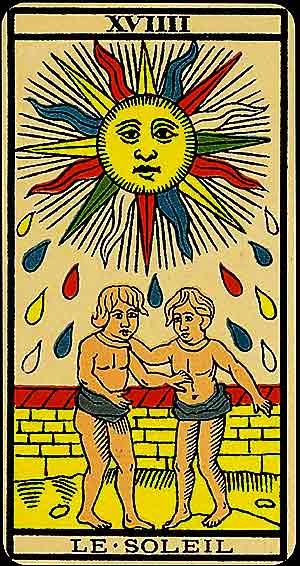 The Sun (Le Soleil) |
The Significator
The Tower
(La Maison Dieu)
Symbolism:
A tall tower struck by lightning collapses as figures fall from its heights, symbolising sudden upheaval. Balls and debris erupt from the structure, representing destruction and chaos. However, the lightning bolt signifies divine intervention, clearing away illusions and false foundations to reveal the truth.
Meaning:
The Tower represents sudden change, upheaval, and the collapse of false structures. While the experience may be shocking or painful, it paves the way for transformation and rebuilding. This card calls for resilience and the ability to embrace new beginnings born from chaos.
In relationships, it may signal a dramatic shift or revelation. Spiritually, it urges you to let go of false beliefs and align with authenticity.
Keywords:
Upheaval, change, chaos, destruction, revelation, transformation, truth, divine intervention, awakening, rebuilding.
Current Thoughts
The Hanged Man
(Le Pendu)
Symbolism:
The Hanged Man is shown suspended upside-down by one foot from a live tree, with his free leg bent to form a cross-like shape. His serene expression suggests surrender rather than distress. This represents enlightenment gained through sacrifice or altered perspective. The tree may symbolise the axis mundi, a bridge between worlds.
Meaning:
The Hanged Man symbolises surrender, letting go, and viewing situations from a different perspective. It suggests a pause or suspension of action, encouraging reflection and patience. This card often appears when you need to relinquish control or embrace sacrifice to gain deeper understanding.
In relationships, it can signal a need for a fresh outlook or willingness to adapt. Spiritually, it points to awakening through non-resistance and the acceptance of higher truths.
Keywords:
Surrender, perspective, patience, sacrifice, reflection, letting go, enlightenment, suspension, adaptation, non-resistance.
Suggested Thoughts
The Magician
(Le Bateleur)
Symbolism:
The Magician is a youthful figure standing behind a table, holding a wand aloft while other tools lie before him—often a coin, a cup, and a sword. These tools represent mastery over the elements and the power to manifest intentions. His hat, shaped like a lemniscate, symbolises infinite potential, and his posture suggests readiness and action. The vibrant colours of his attire evoke creativity, energy, and a zest for life.
Meaning:
The Magician represents the power of initiative, skill, and resourcefulness. He embodies the ability to turn ideas into reality, combining intellect, action, and willpower. The card often signals the beginning of a new venture or opportunity, where focus and confidence are key. However, it also serves as a warning to avoid manipulation or overconfidence.
The Magician invites you to be aware of your tools and talents, urging you to act with intention. It also reminds you that success depends on your ability to harmonise thought and action.
Keywords:
Initiative, manifestation, skill, potential, confidence, willpower, beginnings, resourcefulness, action, focus.
Current Emotions
Justice
(La Justice)
Symbolism:
Justice sits on a throne, holding a sword in one hand and scales in the other. The sword represents truth and decisiveness, while the scales signify balance and fairness. Her gaze is direct, indicating clarity and impartiality. The symmetrical composition of the card underscores equilibrium and order.
Meaning:
Justice represents truth, fairness, and the consequences of one's actions. It urges you to act with integrity and to weigh all factors before making decisions. This card often appears when a decision needs to be made or when karma is at play, reminding you that actions have lasting repercussions.
In relationships, Justice emphasises honesty and mutual respect. Spiritually, it calls for alignment between your actions and higher principles.
Keywords:
Truth, fairness, balance, integrity, accountability, karma, decisions, clarity, consequences, order.
Suggested Emotions
The Moon
(La Lune)
Symbolism:
The Moon hangs high in the sky, casting a dim, mysterious light over a landscape. A dog and a wolf howl at the moon, representing instincts and the untamed subconscious. A pool sits between two towers, suggesting the unknown. A crayfish crawls out of it, symbolising hidden emotions emerging.
Meaning:
The Moon represents intuition, mystery, and the subconscious. It suggests a time of uncertainty where not everything is as it seems. This card invites you to trust your instincts and explore hidden depths. It also warns against illusion or confusion, urging clarity.
In relationships, it can indicate emotional complexity or hidden dynamics. Spiritually, it calls for embracing intuition and the mysteries of the psyche.
Keywords:
Intuition, mystery, subconscious, illusion, uncertainty, emotions, dreams, instincts, exploration, hidden truths.
Current External Stance
Strength
(La Force)
Symbolism:
A serene figure, often a woman, gently tames a lion by holding its jaws open. Her calm demeanour contrasts with the lion's ferocity, symbolising mastery of inner strength. Above her head, the infinity symbol signifies limitless power and spiritual resilience. The image evokes vitality and harmony with nature.
Meaning:
Strength represents courage, compassion, and the balance between force and gentleness. This card embodies inner fortitude, suggesting that true power comes from patience, understanding, and self-discipline rather than brute force. It often appears in situations requiring emotional resilience or the taming of one's impulses.
In relationships, it signifies the power of kindness and understanding. Spiritually, Strength encourages connecting with your inner courage and finding peace amidst challenges.
Keywords:
Inner strength, courage, patience, compassion, resilience, self-discipline, confidence, harmony, emotional balance, fortitude.
Suggested External Stance
The Sun
(Le Soleil)
Symbolism:
The Sun shines brightly over two joyful children, symbolising innocence and vitality. A wall represents protection and growth. The radiant light of the sun signifies clarity, success, and the life force itself.
Meaning:
The Sun represents joy, success, and illumination. It heralds a period of clarity, achievement, and fulfilment. This card encourages positivity, optimism, and self-expression, reminding you to celebrate life's blessings.
In relationships, the Sun signifies warmth, harmony, and mutual happiness. Spiritually, it points to enlightenment and connection with divine light.
Keywords:
Joy, success, clarity, vitality, positivity, enlightenment, achievement, growth, warmth, celebration.
